Course 1 · Setup
The set, the seats and the deal 開局
Before anyone calls chow, you need to know what's on the table: which 144 tiles (or 136), who sits where, and a wall built to exact counts.
The set
Hong Kong tables play two authentic sizes, and you agree before the first deal which one you're using:
| Format | Cantonese | Tiles | Notes |
|---|---|---|---|
| With flowers | 144 tiles | 136 standard + 8 bonus | The traditional family / New Year game |
| Without flowers | 清章 (cing1 zoeng1, "clear chapter") | 136 | Skill-focused competitive standard; flowers are removed before shuffling |
There are no jokers in Hong Kong mahjong. The 136 standard tiles split into number tiles and honours:
- Number tiles 數牌 — 3 suits × ranks 1–9 × 4 copies = 108 tiles. Characters 萬 (maan6, "ten-thousand") show a Chinese numeral over 萬; Bamboo/Strings 索 (sok3) show stick patterns (the 1 Bamboo is traditionally drawn as a bird); Dots/Circles 筒 (tung4) show circle patterns.
- Honour tiles 字牌 (zi6 paai2) — 7 types × 4 copies = 28 tiles. Winds 風牌: East 東, South 南, West 西, North 北. Dragons 三元牌: Red Dragon 紅中 (hung4 zung1, "red centre"), Green Dragon 發財 (faat3 coi4, "get rich"), White Dragon 白板 (baak6 baan2, "blank board", usually drawn with a blue frame). Honours form no sequences — triplet sets only.
- Bonus tiles 花牌 (faa1 paai2) — 8 tiles, one copy each, numbered 1–4 to match the seats:
| Seat | Season | Plant |
|---|---|---|
| 1 East 東 | Spring 春 | Plum 梅 |
| 2 South 南 | Summer 夏 | Orchid 蘭 |
| 3 West 西 | Autumn 秋 | Chrysanthemum 菊 |
| 4 North 北 | Winter 冬 | Bamboo 竹 (the plant — not the bamboo suit) |
Number tiles build sequences and triplets; honours build only triplets and kongs, so honour pairs sitting in your hand are dead weight unless you're planning an All Pungs hand. Flowers are pure bonus with zero decisions — exactly why competitive tables drop them.
Tile anatomy
Every tile face tells you its suit and rank at a glance: a numeral over 萬 for characters, grouped sticks for bamboo, concentric circles for dots. The 1s and 9s are the terminals 么九 (jiu1 gau2) — they matter for several scoring patterns. Explore the full 144-tile set in the explorer below.
Tile explorer 牌面一覽
All 144 tiles of a Hong Kong set. Click any tile — keyboard works too (Tab through, or use the grid as a listbox).
Characters 萬子
Dots 筒子
Bamboo 索子
Winds 風牌
Dragons 番子
Flowers 花牌
Seasons 季牌
Seating and the first dealer 執位
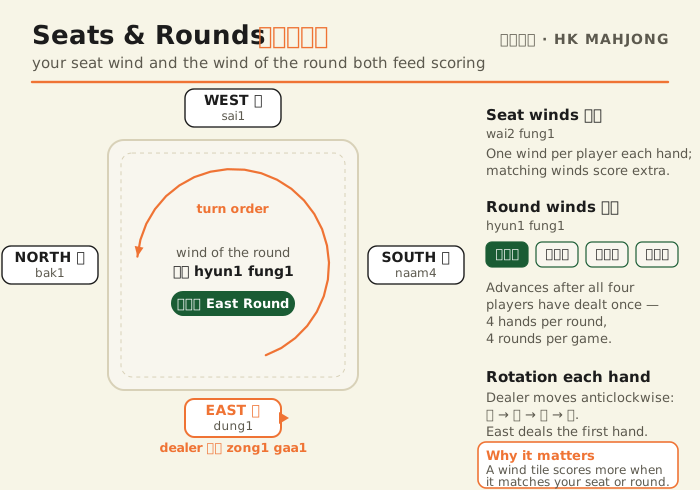
The classic ritual: the four wind tiles go face down, each player draws one and sits at the matching wind position. Tables vary in how much ceremony surrounds this — some shuffle seats by dice count first, then draw for East — but the outcome is the same: the East-seat player is the first dealer 莊家 (zong1 gaa1); the other three are 閒家, non-dealers.
Seat geometry: winds run counter-clockwise — East's right is South, East's left is North, opposite is West. Your neighbours have names used throughout the rules: the player on your left is 上家 (your play comes after theirs), on your right 下家, and opposite 對家.
Rounds and hands
A full game is a 雀 (zeok2): 4 rounds 圈 (hyun1) — East, South, West, North — each containing at least 4 hands 局 (guk6). The first hand is 東圈東局 (East Round, East Hand) and the East-seat player deals.
- The round wind 圈風 (hyun1 fung1) is East for the first round, South for the second, and so on. A round-wind indicator (圈風器) sits in front of the current dealer.
- Each player's seat wind 門風 (mun4 fung1) rotates counter-clockwise as the dealer position advances.
- Dealer rotation: after each hand the dealer passes to their right (過莊 gwo3 zong1) — unless the dealer won the hand, in which case they deal again (連莊/冧莊 lin4 zong1) and seats don't rotate.
On a drawn hand (流局), tradition repeats the dealer; many faster games pass the dealer on a draw and only repeat on a dealer win. HKMA tournaments pass the dealer on a draw regardless. A full game ends when 北圈北局 completes — tournament play additionally caps a round at 100 minutes or 24 hands.
Building the wall 疊牌
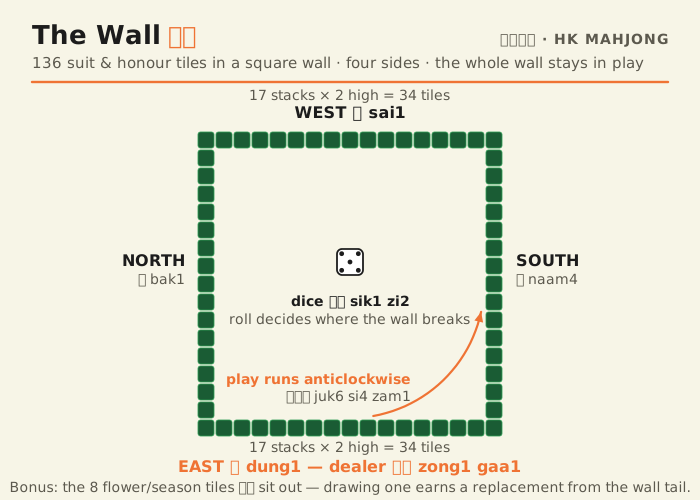
After shuffling face down, each player takes 36 tiles = 18 stacks of 2 (144-tile game) — or 34 tiles = 17 stacks of 2 in the 清章 game — and lines them up in a row in front of them. Four rows make the square wall 牌牆 (paai2 coeng4), every tile face down, two high.
Dice and breaking the wall 開門
- The dealer rolls 2 (or 3) dice and sums the pips → s.
- Count players: starting from the dealer as 1, count counter-clockwise. Sums of 5/9 open the dealer's own wall, 2/6/10 the player to the right, 3/7/11 the opposite player, 4/8/12 the left. Roll an 8 → the left player's wall opens (North, your 上家).
- Count stacks: on that player's wall, count s stacks from its right end, moving clockwise, and push them aside. The skipped section is the wall tail 牌尾 — all replacement draws come from there — and the remainder is the head 牆頭, where normal draws start.
- Draw direction: tiles come off the head, moving clockwise around the wall — opposite to the counter-clockwise turn order. The sources' mnemonic: 逆時針行牌,順時針摸牌 — play counter-clockwise, draw clockwise.
The deal 配牌
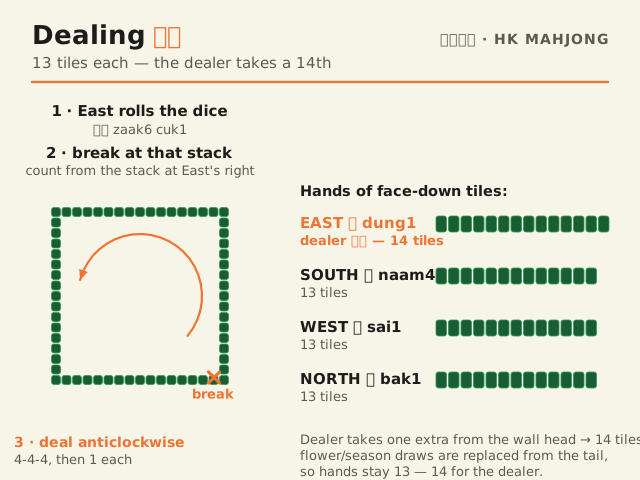
Players take tiles 4 at a time (two stacks) in turn order E→S→W→N, three times — 12 each. Then the dealer jumps: takes one tile, skips one stack, takes one more → 14 tiles; each other player takes one more → 13. If the deal runs past the end of a wall it continues onto the next player's wall, same clockwise direction.
Flower replacement 補花
In the 144-tile game, each player in turn (dealer first, then South, West, North) exposes any flowers/seasons they were dealt beside their hand — never inside it — and draws replacements from the wall tail, one per flower. If a replacement is itself a flower it is set aside too, but the player waits: a second replacement round runs after everyone has replaced once.
Traditional HK play draws the wall down to the very last tile (摸到尾) — there is no permanently reserved dead wall. Kong replacement draws share the same tail.
The opening, step by step
The whole sequence — shuffle, walls, seats, dice, break, deal, flowers, first discard — in eight stages:
From box to hand, step by step 開局流程
Eight stages from a jumbled pile to the dealer's first discard. Step through with the buttons or your keyboard's arrow keys.
Stage 1 / 8 · 洗牌 sai2 paai2
Shuffle
All tiles go face-down in the middle and are shuffled by hand — everybody mixes the tiles with both hands until they are well scattered. First agreement of the night: flowers in (144 tiles) or 清章 clear-chapter (136) — both are authentic Hong Kong play.
Stage 2 / 8 · 砌牌 chai3 paai2
Build the walls
Each player builds one wall 牌牆: 36 tiles = 18 stacks of two, face down (34 = 17 stacks in the 136-tile 清章 game). Four sides form a square ring around the empty centre — and the whole wall stays in play; traditional HK draws it down to the very last tile (摸到尾).
Stage 3 / 8 · 定位 ding6 wai2
Take seats
Draw the four wind tiles face down; each player sits at the wind they draw. East (東) is the first dealer 莊家; winds run counter-clockwise — East's right is South, opposite is West, left is North. Neighbours get names you'll hear all night: 上家 on your left acts before you, 下家 on your right after you, 對家 opposite.
Stage 4 / 8 · 擲骰 zaak6 sik1
Roll the dice
The dealer rolls the dice (2 or 3, by table). Sum the pips → s. First s counts PLAYERS counter-clockwise from the dealer as 1: 5/9 opens the dealer's own wall, 2/6/10 the right, 3/7/11 the opposite, 4/8/12 the left.
Stage 5 / 8 · 開門 hoi1 mun4
Break the wall
On the chosen player's wall, count s stacks from its right end moving clockwise and push them aside — that skipped section is the tail 牌尾, where all replacement draws (flowers, kongs) come from. Drawing starts at the stack after the break and moves clockwise around the wall. Mnemonic: 逆時針行牌,順時針摸牌 — play counter-clockwise, draw clockwise.
Stage 6 / 8 · 派牌 paai3 paai2
The deal
Players take tiles 4 at a time (two stacks) in turn order E→S→W→N — three full rounds, 12 each. Then the dealer jumps: takes one tile, skips one stack, takes one more → 14 tiles; each other player takes one more → 13. If the deal runs past a wall's end it continues onto the next wall, same clockwise direction.
Stage 7 / 8 · 補花 bou2 faa1
Replace flowers
In turn order (dealer first, then S, W, N) anyone dealt a flower or season exposes it beside their hand — outside the wall — and draws a replacement from the tail, one per flower. If a replacement is also a flower it waits: a second replacement round runs after everyone has replaced once. The bonus tiles never sit in your hand.
Stage 8 / 8 · 開牌 hoi1 paai2
Dealer opens
The dealer discards the first tile face-up into the river 牌河 and play begins: turns pass counter-clockwise. A 144-tile hand runs about 24 go-arounds if nobody melds. After each hand the dealer passes to their right (過莊) — unless the dealer won, in which case they deal again (連莊).